🌎 Regional
Main regional disinformation trends – Second quarter of 2026
In the second quarter of 2026, we identified the following as the main topics: the football World Cup; the hantavirus outbreak; the elections in Peru and Colombia; digital scams; the earthquakes in Venezuela; as well as Russian influence campaigns in Mexico.
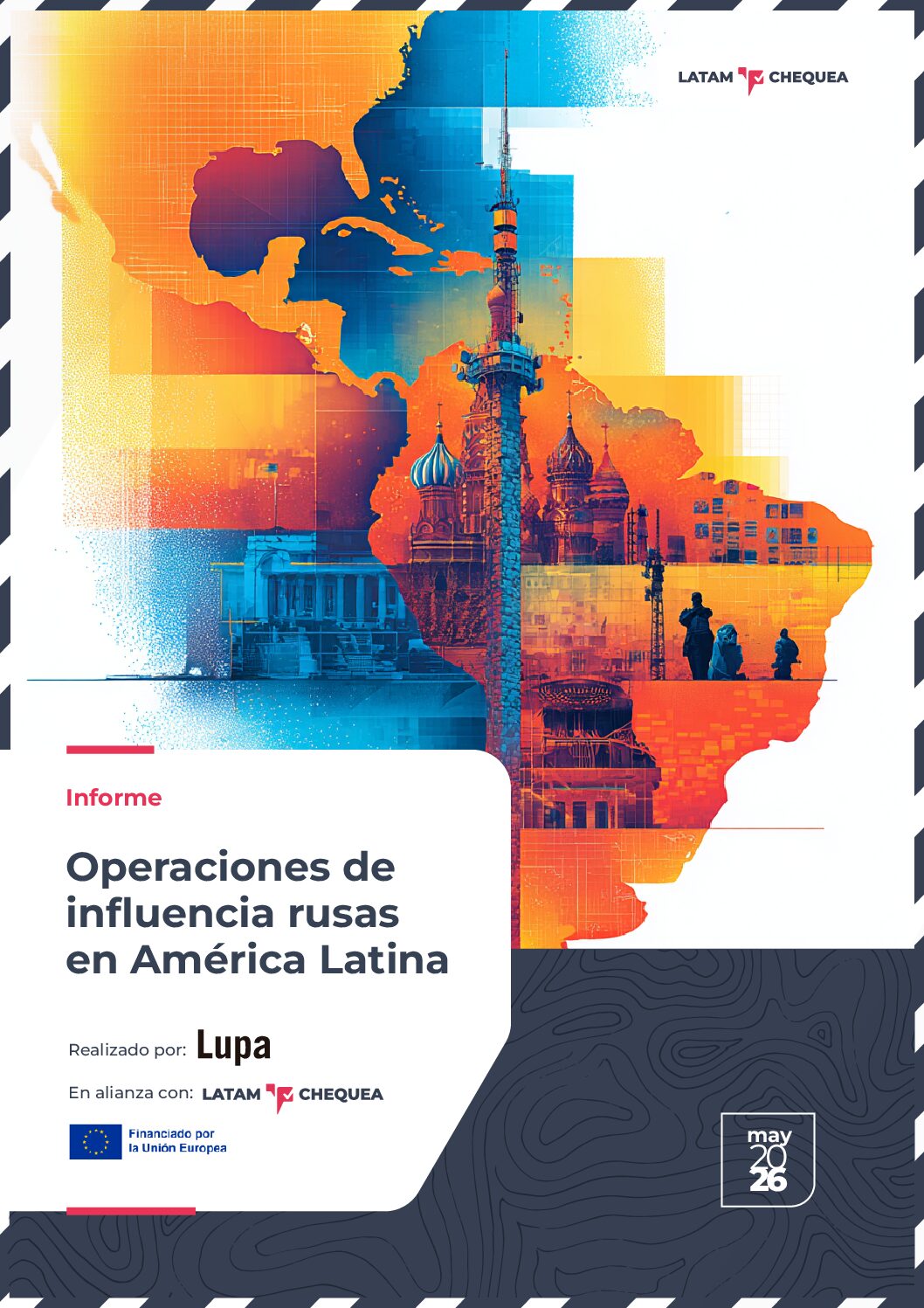
Russian influence operations in Latin America
This report, produced by Lupa (Brazil) in partnership with LatamChequea, documents various instances of foreign information manipulation and interference (FIMI) by Russia in different Latin American countries. Given the clear increase in such cases since the start of the war with Ukraine in February 2022, the report aims to serve as a repository of documented cases of FIMI in various countries across the region, as well as other related incidents.
Main disinformation trends at the regional level – First quarter 2026
In early 2026, we identified the following as key issues: US intervention in Venezuela and the capture of Nicolás Maduro; the conflict in the Middle East; migration in the United States and statements by Donald Trump; elections in Bolivia, Costa Rica, Colombia and Peru; the operation against ‘El Mencho’ in Mexico; and influence campaigns using fake media in Colombia and Venezuela.
Emerging Trends in Disinformation in Latin America
We have identified new trends in disinformation that are spreading across the region: the proliferation of AI-generated scams, disinformation about migration (particularly regarding the United States), and the use of AI to create a sense of chaos during times of crisis. In addition, we also analyze the role of generative AI chatbots as key players in the information ecosystem and in the spread of disinformation.
Main disinformation trends at the regional level – Fourth quarter 2025
During the last quarter of 2025, the main disinformation trends were related to: U.S. immigration policy; elections in Argentina, Bolivia, Chile, and Honduras; scams; the conflict between Venezuela and the United States; and COP 30.
Main disinformation trends at the regional level – Third quarter 2025
In the third quarter of 2025, the main disinformation trends in Latin America were related to: U.S. immigration policies and other measures, such as the conflict with Venezuela; fake weather events; the link between acetaminophen and autism; and elections in Argentina, Bolivia, and Chile.
Main disinformation trends at the regional level – Second quarter 2025
In the second quarter of 2025, disinformation trends were identified regarding immigration in the United States and protests in Los Angeles, scams, elections in Ecuador, election campaigns in Bolivia and Chile, the death of Pope Francis and the appointment of the new Pope, and finally the conflict in the Middle East.
Main disinformation trends at the regional level – First quarter 2025
In the first quarter of 2025, the main disinformation trends were related to: U.S. immigration policy; international cooperation, such as USAID funding; Pope Francis’s health; digital scams; and elections in Ecuador.
Report on disinformation regulation in Latin American countries
This report identifies and characterizes some of the regulatory initiatives and public policies against disinformation carried out in 20 Latin American countries and other regions such as the European Union.
🇨🇱 Chile
Trends in Chile – September 2026
During September, disinformation circulated about national politics, with content related to the government of José Antonio Kast, former president Gabriel Boric, the 53rd anniversary of the 1973 coup d’état, and the death of a Carabinero on duty. On foreign policy, false content was detected concerning Fernando Cerimedo and the heads of state Javier Milei, Donald Trump, Nayib Bukele, and Claudia Sheinbaum.
Trends in Chile – August 2026
During the month of August, disinformation circulated about national politics with content linked to the government of José Antonio Kast and about Chile’s Carabineros police force. Conspiracy theories were also identified regarding the presence of chemtrails in the coastal city of Viña del Mar, as well as content about the natural disasters that occurred in various regions of the world. On foreign policy, false content was detected about the detention of Javier Milei’s former adviser and Rodrigo Paz’s consultant, Fernando Cerimedo.
Trends in Chile – July 2026
During July, disinformation circulated about national politics, with content linked to the government of José Antonio Kast, members of parliament, and other content related to climate events that affected the country. On foreign policy, disinformation content continued to circulate about the double earthquake in Venezuela and about leaders Donald Trump, Javier Milei, and Claudia Sheinbaum. Content about the 2026 World Cup and its repercussions on some athletes also circulated.
Trends in Chile – June 2026
During June, disinformation circulated about national politics, including content related to José Antonio Kast’s government and its first State of the Nation Address, as well as false claims about migration and the supposed launch of low-cost flights between Chile and Venezuela. Regarding international affairs, disinformation was also identified concerning the start of the 2026 FIFA World Cup, international conflicts, earthquakes, and a plane crash in Brazil.
Trends in Chile – May 2026
During the month of May, disinformation circulated about domestic politics, mainly surrounding the government of José Antonio Kast, with false measures attributed to him and to some members of the Chamber of Deputies and the Senate. Regarding foreign policy, disinforming content was identified about various regional leaders, such as a fake image of Argentine President Javier Milei, posts with supposed measures promoted by New York City Mayor Zohran Mamdani, and distorted information about the hearings taking place in the judicial proceedings against Nicolás Maduro.
Trends in Chile – April 2026
During April, a series of false content circulated about national politics, mainly around the government of José Antonio Kast and the alleged salary of Jeannette Jara, former minister and former presidential candidate, as a new lecturer at the University of Santiago. Regarding foreign policy, disinformation content was identified about Argentine president Javier Milei, the second hearing of Nicolás Maduro, and the shots fired at the White House Correspondents’ Dinner.
Trends in Chile – March 2026
During March in Chile, a series of false reports circulated regarding domestic political issues, primarily centring on the change of presidential leadership and the Border Shield Plan, which included the construction of a trench on the border with Peru. On the international front, disinformation was identified regarding the Middle East conflict and Nicolás Maduro’s second hearing in New York.
Elections in Chile
During Chile’s presidential elections, the main types of disinformation detected were: false content about candidates, such as non-existent statements or false proposals; disinformation about the electoral process, such as alleged fraud, the validity of votes, or ineligible voters; and fake polls.
Trends in Chile – February 2026
In February, disinformation about domestic politics circulated in Chile, including false content about President-elect Kast and fabricated protests on Rapa Nui. False international content also circulated, regarding the Jeffrey Epstein case, the death of Nemesio Oseguera Cervantes, and singer Bad Bunny’s appearance at the Super Bowl.
Trends in Chile – January 2026
During January in Chile, disinformation circulated about the wildfires that devastated the south-central region, as well as false content about national politics, such as the cabinet announcement by president-elect José Antonio Kast. Regarding foreign policy, misleading content was identified around the capture of Nicolás Maduro and subsequent international reactions.
Trends in Chile – December 2025
Report produced by Mala Espina Check.
Trends in Chile – November 2025
Report produced by Mala Espina Check.
Trends in Chile – October 2025
Report produced by Mala Espina Check.
Trends in Chile – September 2025
Report produced by Mala Espina Check.
Trends in Chile – August 2025
Report produced by Mala Espina Check.
Trends in Chile – July 2025
Report produced by Mala Espina Check.
Trends in Chile – June 2025
Report produced by Mala Espina Check.
Trends in Chile – May 2025
Report produced by Mala Espina Check.
Trends in Chile – April 2025
Report produced by Mala Espina Check.
Trends in Chile – January to March 2025
Report produced by Mala Espina Check.
🇲🇽 Mexico
Trends in Mexico – September 2026
The main focus of disinformation was national politics, with the spread of supposed initiatives from the Executive and Legislative branches, such as the nonexistent “Anti-Meme Law” or the false proposal to tattoo sex offenders, as well as manipulated images of members of Congress. In addition, a series of false content items on foreign policy were recorded, concerning immigration regulations and international political figures. These included fabricated quotes attributed to Donald Trump about renaming the state of New Mexico, AI-manipulated images of the former U.S. president, and false claims about visa requirements for Brazil and Ecuador.
Trends in Mexico – August 2026
During August, disinformation focused on national and foreign policy issues. False initiatives attributed to the president and fake government measures were spread. False audio recordings and images circulated about arrest warrants against Mexican officials, as well as statements falsely attributed to Donald Trump against Mexico. Another focus of disinformation was posts about migration, such as the alleged ban on Mexicans entering Argentina and the detention of migrants in stores in the United States. In addition, disinformation content was detected about the environment, about the earthquakes in Colombia and conspiracy theories about their origin.
Trends in Mexico – July 2026
During July, the main disinformation topic was the 2026 Football World Cup, with false content about the Mexican National Team, such as apocryphal statements and videos with false declarations from authorities and players. The second most prominent disinformation topic was foreign policy, with false content linked to figures such as Javier Milei and Daniel Noboa, as well as content about a military conflict that did not correspond to recent events. The third focus of disinformation was national politics, with content about President Claudia Sheinbaum, such as false statements and misleading narratives about legislative proposals.
Trends in Mexico – June 2026
During June, disinformation focused on national politics. False claims circulated about statements allegedly made by the Mexican president, as well as fabricated government measures. False audio recordings and images were shared claiming that Mexican officials had been detained by U.S. agents, along with false accusations by Donald Trump that Claudia Sheinbaum was protecting criminal groups. Another major focus of disinformation involved security issues, including claims about the supposed cancellation of the FIFA World Cup in Mexico and the circulation of manipulated videos and images related to narcomantas. In addition, environmental issues were targeted through posts about the earthquakes in Venezuela and the spread of the conspiracy theory surrounding the HAARP project.
Trends in Mexico – May 2026
During May, the main topic generating the most disinformation was domestic politics, with false posts revolving around political figures such as the governor of Sinaloa, Rubén Rocha Moya, and the governor of Aguascalientes, Tere Jiménez. Disinformation hotspots were also detected on security issues, stemming from the formal charges filed against Sinaloa officials. The second most prevalent topic for disinformation was foreign policy, with false content linked to military conflicts and the positions of international leaders. AI-generated or out-of-context videos circulated about clashes in the Strait of Hormuz and the Gulf of Oman, as well as posts that falsely attributed political stances to figures such as Italian Prime Minister Giorgia Meloni.
Trends in Mexico – April 2026
During April, disinformation focused mainly on foreign policy, stemming from the attacks by the United States and Israel against Iran and the development of the conflict. The content revolved around alleged losses of American vessels and weaponry, with posts claiming that Iranian forces had attacked the aircraft carrier “Gerald Ford”, or that an American helicopter had been struck by an Iranian missile.
Trends in Mexico – March 2026
During March, disinformation focused predominantly on foreign policy, driven by the conflict between Iran, Israel and the United States. In the Mexican domestic context, cases were identified such as the video at the National Palace, where the government body Infodemia erroneously classified a real video as having been created by AI, and a series of disinformation stories regarding security issues following the death of Nemesio “El Mencho” Oseguera.
Trends in Mexico – February 2026
In February, disinformation focused primarily on security issues, following the murder of Nemesio Oseguera, alias El Mencho, founder and leader of the Jalisco New Generation Cartel. There was also international fake content about the United States, related to ICE, the Super Bowl, or Donald Trump, as well as posts about Venezuela.
Trends in Mexico – January 2026
During January 2026 in Mexico, disinformation focused on the capture of Nicolás Maduro by the US government and measures taken by Venezuelan officials. Content related to US immigration policy was also highlighted. Additionally, false content was identified about alleged US attacks on Mexican soil, with notable use of AI to generate videos about these supposed confrontations.
Trends in Mexico – December 2025
Report produced by Animal Político and Verificado MX.
Trends in Mexico – November 2025
Report produced by Animal Político and Verificado MX.
Trends in Mexico – October 2025
Report produced by Animal Político and Verificado MX.
Trends in Mexico – September 2025
Report produced by Animal Político and Verificado MX.
Trends in Mexico – August 2025
Report produced by Animal Político and Verificado MX.
Trends in Mexico – July 2025
Report produced by Animal Político and Verificado MX.
Trends in Mexico – June 2025
Report produced by Animal Político and Verificado MX.
Trends in Mexico – May 2025
Report produced by Animal Político and Verificado MX.
Trends in Mexico – April 2025
Report produced by Animal Político and Verificado MX.
Trends in Mexico – January to March 2025
Report produced by Animal Político and Verificado MX.
🇺🇾 Uruguay
Trends in Uruguay – September 2026
During September, disinformation about national politics was detected, mainly concerning political leaders. Second, disinformation focused on gender issues and the LGBTIQ+ community, prompted by the Diversity March in Montevideo, which led to the spread of false content on the subject. In addition, a disinformation campaign was identified that circulated in Uruguay, based on AI-generated videos of supposed voters linked to the elections in Brazil.
Trends in Uruguay – August 2026
During August, one of the main disinformation topics was migration, following the increase in migrants who entered Ceuta. Additionally, disinformation was detected about the earthquakes in Colombia and Venezuela. Images and videos taken out of context circulated, along with AI-generated content. Virtual scams that used the identity of public agencies also circulated, a recurring mechanism in the country.
Trends in Uruguay – July 2026
During July, the main disinformation topic was national politics, with publications about public spending and alleged hirings. In addition, disinformation on international topics linked to the World Cup and the earthquakes in Venezuela also circulated.
Trends in Uruguay – June 2026
During June, the main topic of disinformation was national politics, particularly regarding public spending and government hiring. In addition, disinformation related to international affairs circulated, including false claims about the FIFA World Cup, the earthquake in Venezuela, and the political situation in Bolivia.
Trends in Uruguay – May 2026
In May, the main topic of disinformation was domestic politics, specifically regarding payments to relatives of people who disappeared during the last military dictatorship. Additionally, disinformation spread about foreign policy topics, including an alleged plan to create a Jewish enclave in Argentine Patagonia, the origins of hantavirus on a cruise ship, and the crisis in Cuba.
Trends in Uruguay – April 2026
In April, the main disinformation topic was national politics, based on false content about public officials or crime statistics. On the other hand, disinformation about foreign policy topics linked to the disputes between Donald Trump and Leo XIV was also spread.
Trends in Uruguay – March 2026
In March, the main topic of disinformation was foreign policy, stemming from content regarding the armed conflict in the Middle East. Meanwhile, false content was also circulated on domestic political issues, focusing on allegations against officials or political leaders.
Trends in Uruguay – February 2026
In February, the main topic of disinformation was domestic politics, stemming from content about public officials or security. False content was also disseminated on foreign policy issues, following the U.S. blockade of oil shipments to Cuba. Additionally, online scams targeting public figures and state-owned companies continue to circulate.
Trends in Uruguay – January 2026
In January, the main disinformation topic in Uruguay was foreign policy stemming from the US military operation in Venezuela and massive protests in Iran. False content about national politics and proposed tax changes by the ruling party also spread. Online scams impersonating public figures and state-owned companies circulated again as well.
Trends in Uruguay – December 2025
Report produced by La Diaria (Uruguay).
Trends in Uruguay – November 2025
Report produced by La Diaria (Uruguay).
Trends in Uruguay – October 2025
Report produced by La Diaria (Uruguay).
Trends in Uruguay – September 2025
Report produced by La Diaria (Uruguay).
Trends in Uruguay – August 2025
Report produced by La Diaria (Uruguay).
Trends in Uruguay – July 2025
Report produced by La Diaria (Uruguay).
Trends in Uruguay – June 2025
Report produced by La Diaria (Uruguay).
Trends in Uruguay – May 2025
Report produced by La Diaria (Uruguay).
Trends in Uruguay – April 2025
Report produced by La Diaria (Uruguay).
Trends in Uruguay – January to March 2025
Report produced by La Diaria (Uruguay).
This site is part of the project ‘Promoting reliable information and tackling disinformation in Latin America’, coordinated by Chequeado at the regional level and funded by the European Union. Its content is the sole responsibility of LatamChequea and does not necessarily reflect the views of the European Union.
Produced by

In alliance with